The dangerous part of fraud today is not extra intelligence but falling cost: public tools now produce a convincing message, or a voice that sounds like someone you know, quickly, cheaply and far more realistically than before.
Most of what protects a company is not advanced technology: a written verification path, defined permissions, and a team that knows how payments usually happen, so an unusual request stands out.
What actually changed in AI-assisted fraud
The first change is cost and realism: the UK National Cyber Security Centre describes how creating text, image, voice and video now takes little effort, at low cost and higher realism, and that these tools are already used to impersonate, clone and deceive people.
The second change is the lost language clue: spelling mistakes and clumsy phrasing used to expose forged messages quickly, and criminal use of AI for translation and rewriting has clearly reduced them.
The third change is voice as impersonation material: the Federal Bureau of Investigation warns about short clips built to sound like a relative or a known person, used in a situation that asks for immediate financial help.
More broadly, the INTERPOL global financial fraud assessment of March 2026 estimates that AI-enhanced fraud is about 4.5 times more profitable than traditional methods, and that agentic AI systems can plan and run a whole fraud campaign.
The forms that threaten a company or a shop
The shape changes, the goal does not: a payment, data, or access. Five forms cover most of what arrives:
- Professionally written phishing: a message that mimics your usual correspondence, language and context, asking for an urgent step.
- Impersonating a manager or an official: a text or a call in the voice of someone you know, asking for an urgent transfer and discretion.
- A forged invoice: a supplier account number changed inside a real email thread, so the request looks routine.
- Brand or shop impersonation: an account, page or payment window that copies your name and logo to collect money or data from your customers.
- Moving to a new channel: shifting to a number or app never used before, which gives the other side control over what you see and hear.
The common factor is that no one needs to break into your financial system; the request arrives where your business normally happens, which is why work rules, not suspicion, are the first line of defence.
The signs that expose an attempt before it runs
A spelling error is no longer enough, but the pattern of the request remains: a demand outside the usual procedure, a fast exception, a change in payment details, secrecy asked from the team, or time pressure combined with a refusal to verify.
On calls, official guidance recommends listening to tone and word choice, and warns that a cloned voice can sound close enough to the real one that telling them apart is hard. So the answer is not the ear, but independent verification using a number you look up yourself.
Practical protection steps inside the company
- A second verification channel: every request to change payment details is confirmed through a method different from the one it arrived on, using a number from your directory.
- Permissions and limits: no transfer runs on one person's decision, with a written threshold above which a second approval is required.
- Two-factor authentication on email and financial accounts, and anti-spoofing controls on your domain to cut messages sent in your name.
- Training on the normal procedure, not on a list of mistakes: whoever knows how your payments work spots the deviation faster.
- A written response plan: who is notified, who stops the payment, who contacts the authorities, and where evidence is kept, before the incident.
Also reduce what is published about your team: photos, voices and job titles online are the first material for a convincing impersonation. Tell customers and suppliers what you will never ask for.
AI on the defence side, and what this means in Libya
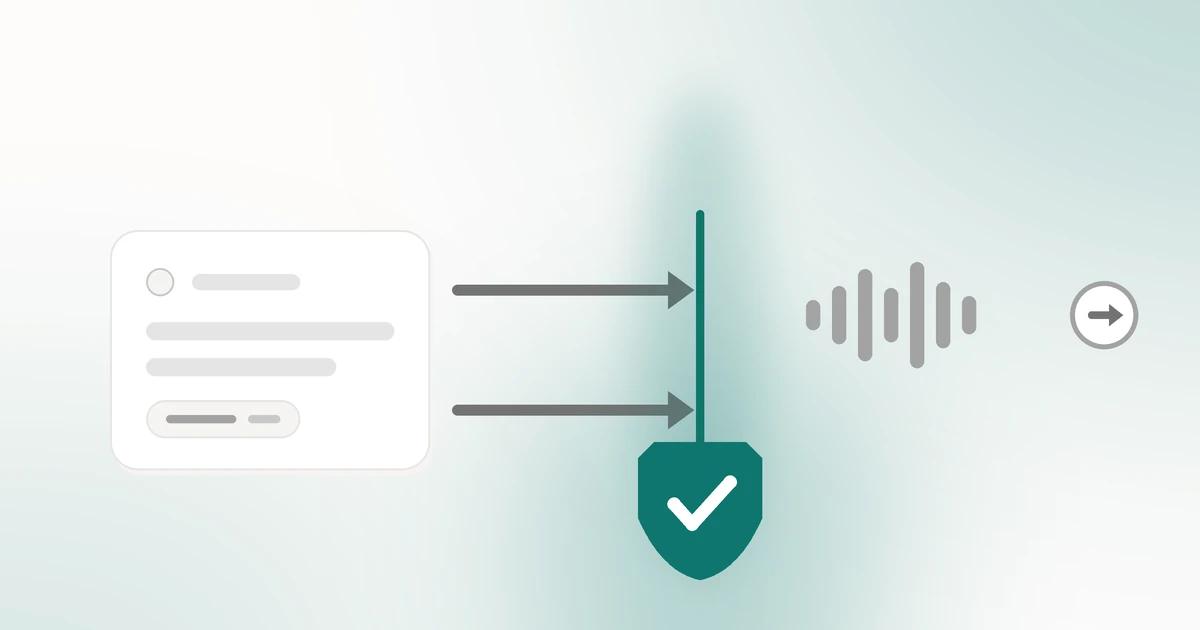
The same tool works in the opposite direction. Enterprise email filters read the whole message, including hidden markup and quoted content, and classify it with language models alongside sender and reputation signals, to judge intent rather than shape.
The limit should be stated plainly: this is an extra detection layer, not a full guarantee, and it can be wrong in both directions. A financial decision still needs human verification.
In Libya, many companies and shops run orders and payments over the phone and messaging apps, with small teams, and the owner often approves spending. The dangerous request then reaches one person through an unverified channel and asks for an immediate decision. Protection here is a procedure, not a subscription: one verification line, a known threshold, two-factor authentication, and a clear notice to your customers that account numbers are never changed by message.
The takeaway fits in one line: make independent confirmation a condition before any financial commitment, write it down, and tell everyone who answers your customers. For a first step, the services section on the site covers email and system protection, and the contact section is a direct channel to discuss your case.
Sources
- FBI — IC3 PSA241203 (3 December 2024), "Criminals Use Generative AI to Facilitate Financial Fraud": fewer spelling and language errors thanks to generative tools, voice cloning to imitate a relative asking for urgent financial help, and advice to limit the public sharing of images and voices
- FBI — IC3 PSA250515 (15 May 2025), "Senior US Officials Impersonated in Malicious Messaging Campaign": officials impersonated through messages and calls, the need for independent identity verification using a number the recipient looks up, and cloned voices close enough to the real one that telling them apart is hard
- INTERPOL — global financial fraud assessment (March 2026): AI-enhanced fraud is about 4.5 times more profitable than traditional methods, and agentic AI systems can plan and run whole fraud campaigns
- NCSC (United Kingdom) — "Preserving integrity in the age of generative AI": generative tools spread at low effort and cost and with higher realism, and are already used to impersonate, clone and deceive people
- NCSC (United Kingdom) — "Phishing attacks: defending your organisation": exploitation of normal working procedures, confirming important payment requests through a second communication channel, two-factor authentication, anti-spoofing controls on the domain (DMARC/SPF/DKIM), and telling customers and suppliers what the company never asks for
- CISA, NSA, FBI and MS-ISAC — "Phishing Guidance: Stopping the Attack Cycle at Phase One" (official PDF): defences for small and medium organisations, spotting suspicious messages, and a response plan written before the incident
- Microsoft Learn — "Prompt injection protection in Microsoft Defender for Office 365": language-model classification alongside sender and reputation signals to read the intent of the message, and detection of hidden content, unreadable encoding and quoted text
This article was produced with the help of AI tools and reviewed by a human before publication.